Autodata 3.40 Pt Pt Iso 152 Apr 2026
Provides integrated results with advanced visual analytical interface.
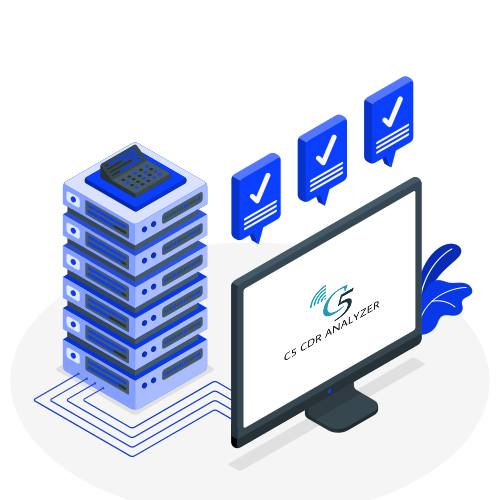
Provides integrated results with advanced visual analytical interface.
Technical teams often skip the small polish. But Sofia knew language is safety. In a recent pilot, a mistranslation of “coolant pressure” as “coolant temperature” had led a technician to overlook a pressure leak; the car left the shop and failed 12 km down the highway. Small wording changes could be the difference between a quick fix and a costly recall.
On rollout day, Sofia watched the telemetry. Error rates for ambiguous diagnostics dropped, technicians completed jobs faster, and fleet managers reported fewer callbacks. A mid-sized delivery company reduced unscheduled downtime by 14% in the first month. More meaningful to Sofia was a note from Ana: “Thanks — the prompts feel like they were written by someone who’s been under the hood.” It was simple, human validation that standards and software could meet the messy reality of the road.
By the end of the week, Autodata 3.40 had been refined through real-world feedback. The release notes were updated with examples that matched Portuguese driving contexts — from the tight streets of Alfama to long motorway hauls across the A1 — and the printed service reports followed ISO 152 guidelines so that third-party auditors and insurance inspectors would find them consistent and reliable.
In the dimly lit office at the edge of the industrial park, Sofia scrolled through the latest firmware notes on her tablet. The project had been humming for months: updating a fleet of diagnostic units across Portugal to a new release codenamed Autodata 3.40. The brief from headquarters had been terse — “PT-PT ISO 152,” — meaning the Portuguese (Portugal) language pack with strict adherence to local ISO 152 formatting standards for technical documentation. It was small in wording but heavy in consequence: mechanics, fleet managers, and roadside technicians would rely on these units to diagnose, patch, and validate vehicles under time pressure and real safety concerns.
Sofia closed her tablet, satisfied. Later that evening, Miguel texted a photo of a spotless service report pinned to a truck dashboard with a Portuguese caption: “Trabalho bem feito.” It was a small, human echo of the project’s success — a technical standard, rendered in a language that fit the hands that used it.
But not everything was perfect. In one scenario the decimal separator remained a period in a third-party module’s log output, creating a mismatch on a compact printout that confused Miguel when he checked results between the tablet and the printout in low light. Sofia added an extra validation step to the build pipeline: enforce locale-aware formatting across all integrated modules and inject a unit-test to catch any change that reverted to default en_US formatting.
In the final sign-off, the product owner appended a tiny but deliberate line to the release: “Compliant with PT-PT ISO 152 — validated in situ.” It read like a certification, but it meant more — it meant that the tools technicians used were respectful of their language, their workflows, and the local norms that keep cars, drivers, and roads safer. Autodata 3.40 was not just an incremental version number; it was the product of linguistic care, technical rigor, and a belief that a software update should reduce friction, not add it.
At the first garage, Luís ran the diagnostic and smiled when he saw the new wording. The interface felt native; the action prompts matched the shorthand they used during busy shifts. The deterministic self-test produced a compact report: a brief summary, a prioritized list of faults, and a “confidence” percentage — a small green ribbon for anything above 85% confidence. Ana noticed that emissions-related warnings included recommended next steps and estimated time-to-repair, which she could relay to fleet managers in a single sentence over the phone.
We offer pricing plans that fit all investigation types and team sizes. Compare and find the best plan for you.

The perfect way to test out your analytical needs and later upgrade to what suites you best. Autodata 3.40 pt pt iso 152
 30 days Licence
All Features Unlocked
No Payments Required
Quick Installation
Easy to Upgrade
Mobile App
30 days Licence
All Features Unlocked
No Payments Required
Quick Installation
Easy to Upgrade
Mobile App

A must have tool for all your IPDR investigative needs. Experience next-gen IPDR analytics with C5 CAT Edition. Technical teams often skip the small polish

The optimum choice of IOS to let Application work as a client-server in local network or stand-alone as well. Small wording changes could be the difference between

The most powerful option for mid and big-size organizations looking to get as much data as possible.

This edition is a bespoke data analytical solution. Designed, developed and tailored to fit your organizations specific needs
Unlimited Big Data, Ultimate Solution
Data with no limits for Big data analysis with state of art data security measures.Enterprise edition of the C5 CDR analyzer consist of a server license and a complimentary copy of the client License. Server License would be installed on the server thereafter client license would be installed on a computer connected to the server through LAN network. This implementation would enable C5 client to connect to the server and access the data on the basis of assigned privileges. Thus maintaining data security would be easy and data is located centrally.
Ultimate solution for Big Data Analysis
Ultimate solution for Big data analysis with state of art data security measures.Enterprise edition of the C5 CDR analyzer consist of a server license and a complimentary copy of the client License. Server License would be installed on the server thereafter client license would be installed on a computer connected to the server through LAN network. .This implementation would enable C5 client to connect to the server and access the data on the basis of assigned privileges. Thus maintaining data security would be easy and data is located centrally.
The C5 CDR Analyzer's Professional Edition is capable of working as a client to the server in local network as well as this edition also can be used as stand-alone; required data from the server can be transferred into this and can be carried anywhere needed for analysis.
A Lite version of the acclaimed C5 CDR ANALYZER made by Prosoft e-Solutions India Pvt. Ltd. The desktop application that is convenient and simple to use, helps you find crucial information expeditiously. Ideal for day to day CDR analysis, it’s designed from the ground up with performance and accuracy being the focus of development. With an intuitive UI and user-friendly operations this application makes it a must have, for anyone with the need and know-how of CDR analytics.
Android Application
For the officers on the move

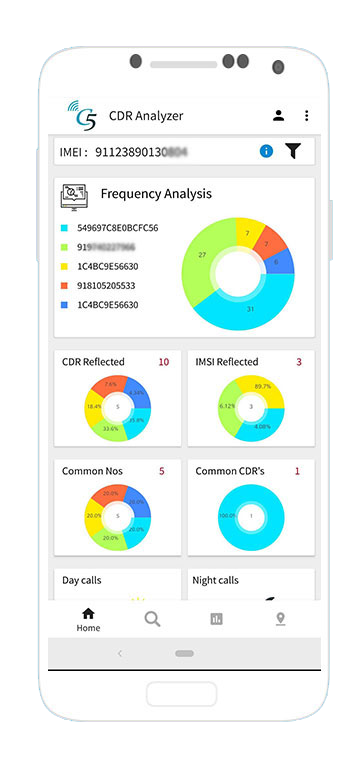
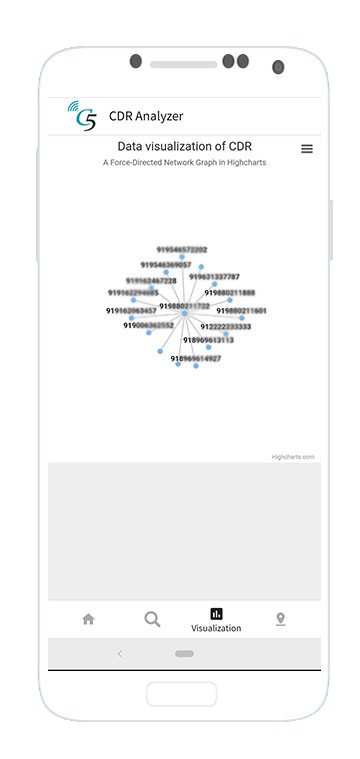
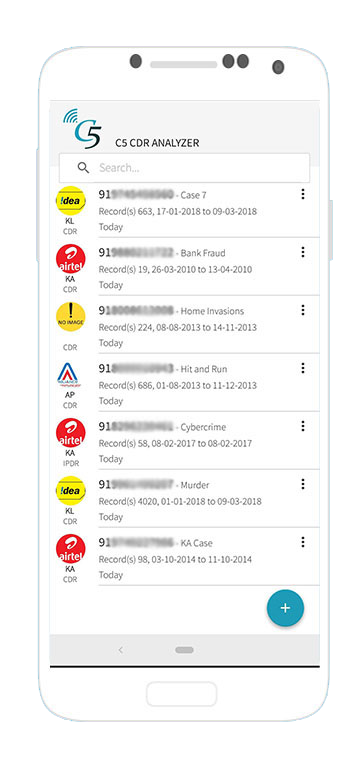
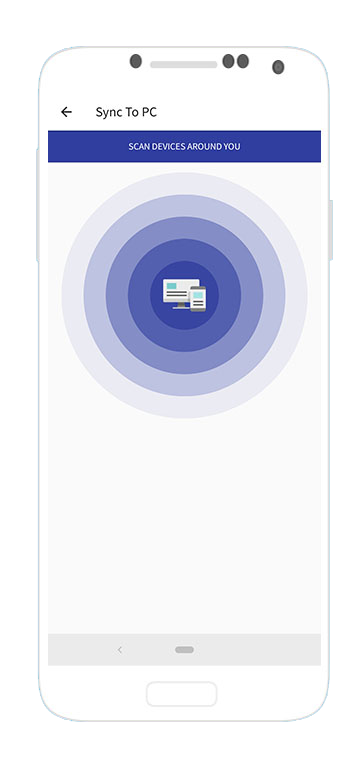
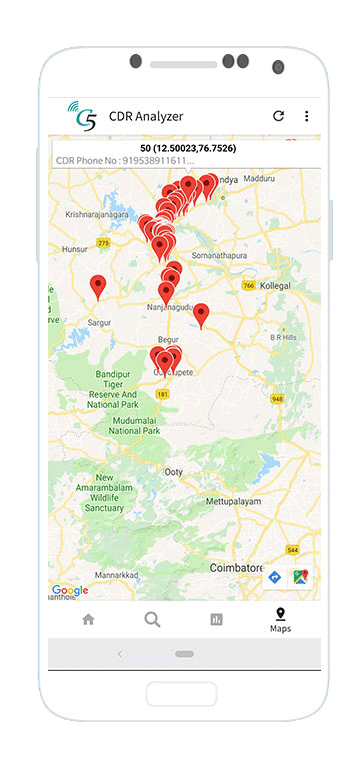
Providing you with powerful analytical tools, is what we do best.
























Technical teams often skip the small polish. But Sofia knew language is safety. In a recent pilot, a mistranslation of “coolant pressure” as “coolant temperature” had led a technician to overlook a pressure leak; the car left the shop and failed 12 km down the highway. Small wording changes could be the difference between a quick fix and a costly recall.
On rollout day, Sofia watched the telemetry. Error rates for ambiguous diagnostics dropped, technicians completed jobs faster, and fleet managers reported fewer callbacks. A mid-sized delivery company reduced unscheduled downtime by 14% in the first month. More meaningful to Sofia was a note from Ana: “Thanks — the prompts feel like they were written by someone who’s been under the hood.” It was simple, human validation that standards and software could meet the messy reality of the road.
By the end of the week, Autodata 3.40 had been refined through real-world feedback. The release notes were updated with examples that matched Portuguese driving contexts — from the tight streets of Alfama to long motorway hauls across the A1 — and the printed service reports followed ISO 152 guidelines so that third-party auditors and insurance inspectors would find them consistent and reliable.
In the dimly lit office at the edge of the industrial park, Sofia scrolled through the latest firmware notes on her tablet. The project had been humming for months: updating a fleet of diagnostic units across Portugal to a new release codenamed Autodata 3.40. The brief from headquarters had been terse — “PT-PT ISO 152,” — meaning the Portuguese (Portugal) language pack with strict adherence to local ISO 152 formatting standards for technical documentation. It was small in wording but heavy in consequence: mechanics, fleet managers, and roadside technicians would rely on these units to diagnose, patch, and validate vehicles under time pressure and real safety concerns.
Sofia closed her tablet, satisfied. Later that evening, Miguel texted a photo of a spotless service report pinned to a truck dashboard with a Portuguese caption: “Trabalho bem feito.” It was a small, human echo of the project’s success — a technical standard, rendered in a language that fit the hands that used it.
But not everything was perfect. In one scenario the decimal separator remained a period in a third-party module’s log output, creating a mismatch on a compact printout that confused Miguel when he checked results between the tablet and the printout in low light. Sofia added an extra validation step to the build pipeline: enforce locale-aware formatting across all integrated modules and inject a unit-test to catch any change that reverted to default en_US formatting.
In the final sign-off, the product owner appended a tiny but deliberate line to the release: “Compliant with PT-PT ISO 152 — validated in situ.” It read like a certification, but it meant more — it meant that the tools technicians used were respectful of their language, their workflows, and the local norms that keep cars, drivers, and roads safer. Autodata 3.40 was not just an incremental version number; it was the product of linguistic care, technical rigor, and a belief that a software update should reduce friction, not add it.
At the first garage, Luís ran the diagnostic and smiled when he saw the new wording. The interface felt native; the action prompts matched the shorthand they used during busy shifts. The deterministic self-test produced a compact report: a brief summary, a prioritized list of faults, and a “confidence” percentage — a small green ribbon for anything above 85% confidence. Ana noticed that emissions-related warnings included recommended next steps and estimated time-to-repair, which she could relay to fleet managers in a single sentence over the phone.